SEO for Small Businesses: The 10 Biggest Content Mistakes SMEs Make

Search engine optimisation (SEO) is the process of changing a business's website content, which allows small businesses to gain a larger online presence and create trust between them and their ideal target audience. Most small businesses apply SEO incorrectly, which leads to a loss of very important time for small businesses. A lot of articles on the internet give generic information on SEO for businesses, but in this article, we’re going to give you information specifically for small businesses, because that’s what we’re experts at and it’s what we do best!
What Is SEO & Why Should Your Business Care?
Many small businesses are practically invisible to the search engines such as Google, usually because of poor optimisation of the website. This will lead to a lack of sales and a waste of company time and budget.
A key part of SEO is Content Marketing, which is the act of publishing high-quality posts that will engage target audiences and encourage them to visit the site. Through publishing valuable blogs, articles, and resources, SMEs can increase their credibility and organic visibility. It is very important for small businesses to improve their organic visibility in search engines, as it makes their businesses easier to find and contact.
Many people searching the internet skip past the sponsored results at the top of the search engine as they often feel that paid for results are not going to provide the best result for their search. These top placements are known as Pay-Per-Click (PPC) ads, where businesses pay a fee each time someone clicks on their website link. Most small businesses look for quick results, meaning they are often happy to pay each time a viewer clicks on their business, even though it doesn’t promise long-term equity or large, profitable sales. However, SEO is a more cost-effective, measurable and trackable strategy that improves a business's credibility and increases digital visibility. SEO drives around 53% of all website traffic, which reinforces that it is very important to optimise your website in order to attract the ideal audience.
Remember: SEO doesn’t fail because it doesn’t work. It fails because it’s implemented without strategy.
10 Common Content Mistakes SMEs Make
1. Giving Up On Content Too Soon
Many SMEs find that content doesn’t deliver instant results, and because of this, many small businesses give up before it has the time to showcase its capabilities. Smaller businesses often prioritise quick wins and short-term returns. However, these fast results rarely deliver lasting impact, especially when compared to longer-term strategies that can significantly improve visibility and attract a wider audience over time. Setting realistic expectations and ensuring consistent publishing of content is key to driving ongoing results.
2. Publishing Content Without Promoting It
The distribution of content matters just as much as the creation of it. Repurposing one piece of content into multiple formats and sharing it is key.
Focusing solely on your website and assuming that publishing blog content alone will improve your visibility and discovery is rarely enough. Off-page efforts, such as building high-quality backlinks and forming partnerships with other reputable businesses, can significantly strengthen your visibility in search engine results, which is crucial for small businesses looking to get their name out there.
Post your content more than once; repurpose it, email it, create social snippets, form partnerships and build communities.
3. Posting or Updating Content Infrequently
The third mistake that many businesses make is thinking that a new blog every so often will make a massive change; however, posting relevant content regularly can help improve your brand’s credibility and increase audience engagement of your content across your website. Even getting the simple things correct, like understanding the type of videos your target audience wants to see, can attract a larger audience to your website.
Ensuring what you post is high-quality, optimised content drives organic growth massively, and using the right keywords can help your audience to find your website more easily. Create a schedule of activity (2 posts per month is a good starting point)
- Plan themes in order to stay consistent
- Keep quality high
- Create FAQs you get asked
- Build out ‘How It Works’ explainers
- Write Case Studies
4. Creating Content Without a Clear Plan
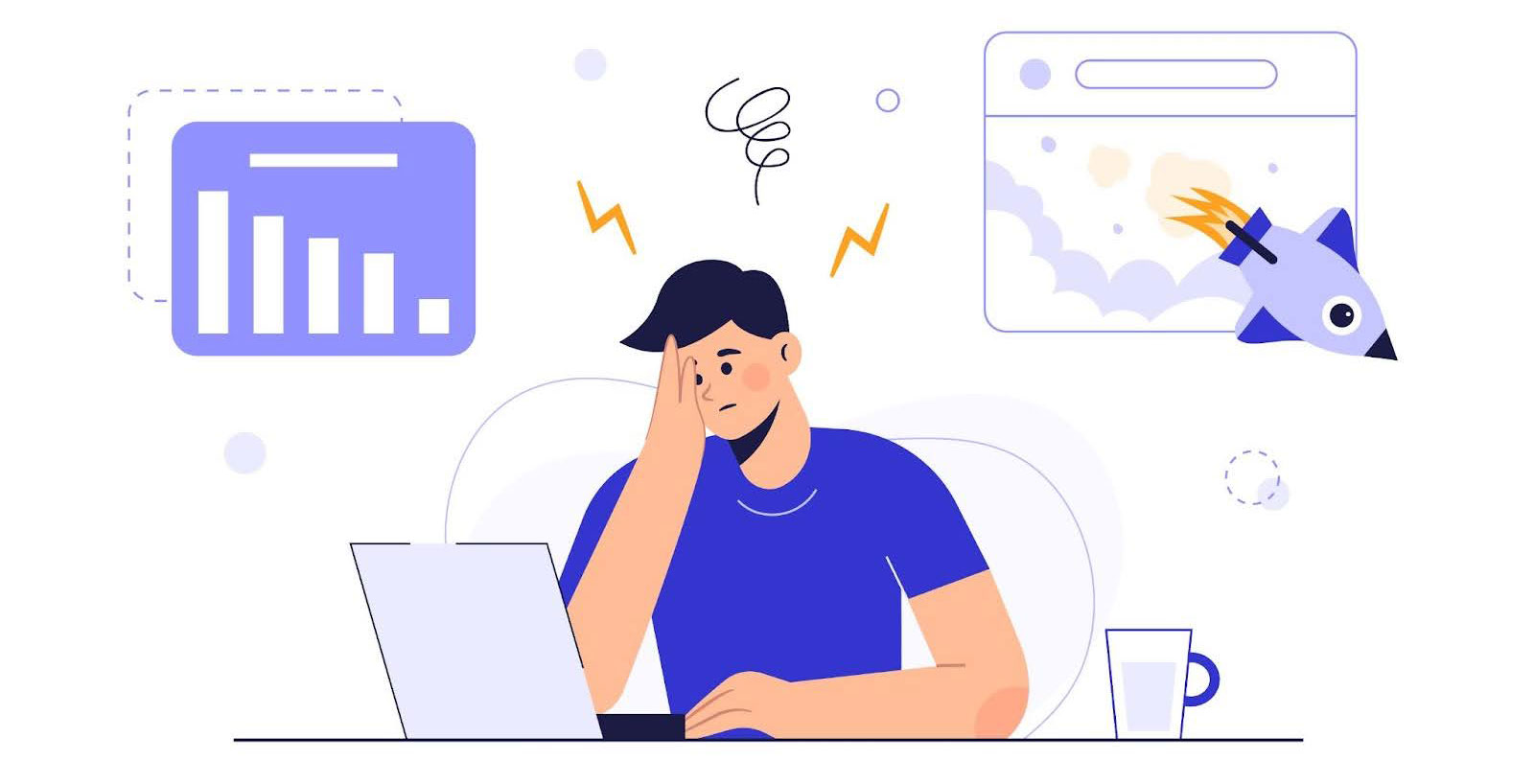
An unclear strategy is one of the most common mistakes SMEs make as they look for quick profits and rush into digital marketing without a clear plan. This leads to poor organic growth, if any, and not seeing the immense positives that content can provide if managed efficiently. Having a vague strategy leads to potentially targeting the wrong audience, which creates purposeless content and generates very few clicks.
Not creating a strong strategy leads to wasted company time and budget. A strong content plan does not operate alone; many small businesses treat their website, email, and social media marketing as separate efforts. However, an omni-channel content marketing strategy ensures consistent messaging across all platforms, strengthening brand visibility and supporting organic growth. Creating a strong and clear strategy should be one of the first steps to improving your online presence and brand visibility.
5. Focusing Too Much on Sales
Many small businesses look for easy sales; however, digital marketing requires patience, building trust, and providing value to the ideal target audience. For many small businesses, aggressively focusing on boosting sales can consume valuable time and resources. In the early stages, this approach may also risk damaging your brand’s reputation, especially if it comes across as pushy or overwhelming to potential customers.
Constant selling turns people off and reduces trust in a company. Lead with value; educate - guide - provide insight and helpful resources and you will build yourself an engaged audience who trusts you and what you do.
Utilising content can help to increase your company's conversion rates (the percentage of website visitors who take a desired action), which increases sales. Therefore, by focusing on content, you not only get more trusting customers but you also increase your sales without having to waste time emailing, calling, or directly messaging uninterested people. Sales content works most effectively when it’s supported by helpful content.
6. Writing for Algorithms, Not Humans
Overusing keywords in an attempt to rank higher in search engines can make your content sound forced and unnatural. When this happens, the writing feels robotic and loses its natural flow, making it harder for readers to understand and engage with. As a result, visitors are more likely to leave quickly, increasing your bounce rate and potentially harming your brand’s reputation.
While incorporating relevant keywords is important for SEO, it should never come at the expense of clarity and authenticity. A relatable, human tone builds trust and keeps readers on the page. Ultimately, your blog content should focus on satisfying search intent - clearly answering the questions your audience is asking and providing genuine value. Write in the same way that you speak to your customers; with simple language, real examples and short sentences.
7. Ignoring Local Content Opportunities
Local SEO is the process of optimising your online presence so your business appears in location-based searches. Many small businesses not only ignore their analytics in tools like Google Analytics and Google Search Console, but also fail to optimise their Google Business Profile, which allows locals to get directions to their business more easily.
Coming up on local search results is very important for SMEs to be discovered by nearby potential customers, e.g., ‘Coffee Shop near me’ or ‘Restaurants in Oxford’. Appearing in these searches can help to generate website clicks, sales, and bookings. This is why clearly showing your address on your page is very useful, as Google automatically uses that to direct locals to your company.
Make sure you use proof of location in your case studies, testimonials, local projects and community involvement. Keep your details consistent across all of your platforms and add local relevance regularly (events, partnerships, local guides, etc.)
8. Not Taking An Omnichannel Approach To Your Content
Customers don’t stick to one platform; they might discover you on social media, check reviews on Google, browse your website, and then email or message before buying. If your content isn’t consistent across channels (message, visuals, offers, and tone), it creates confusion and drops trust. An omnichannel approach keeps everything joined up, so wherever someone finds you, it feels familiar and makes it easier for them to take the next step.
Don’t forget to post across channels. Use one core message, then adapt it per channel.
9. Neglecting Visual Content
The web design of your page is very important as it immediately creates a first impression on the viewer; therefore, the structure of your page must hook the viewer in and engage them in the content you offer.
Strong visuals increase engagement and make content easier to understand. If your content is hard to scan or looks dull, people just won’t engage,
Even the simplest things, like a relevant photo or short video on your website, can interest and engage viewers and highlight the key points you want to make. Only having text on your page can leave viewers uninterested and not engaged in your content. Therefore, the visuals must be engaging and attract your ideal target audience to your company.
10. Not Structuring Content for Readability

Many SMEs forget that viewers aren’t necessarily instantly invested in your business and often click off after feeling slightly uninterested. Therefore, the use of various tools such as headings, bullet points, short paragraphs, and key phrases highlighted in bold are easy ways to allow viewers to understand your product or service without the need for pointless filler words. Most people scan-read; having a clear structure helps them stay.
Using headings, keeping paragraphs short, adding bullet points and clear takeaways all help in ensuring easy reading.
Ready to Improve Your Content?
If you notice your business makes some of the mistakes stated above, don’t worry; many small businesses struggle with content strategy, and these common mistakes are all quite simple to resolve!
At Beyond Your Brand, our content experts create successful campaigns that make the most of your budget and time. We handle each aspect of content and SEO using analytical tools, like Google Search Console and GA4 to monitor progress. Simply contact us today to get started!

