Cheap Website Red Flags: What To Check Before You Commit

Choosing a cheap website can make some business owners wary. Most people have heard a story about a website that looked nothing like expected, stopped working after launch, or became far more expensive than the original quote suggested. But the problem is not necessarily the price itself. It is what you actually get for that price, and what happens after you've paid.
For many businesses, keeping the initial cost down or spreading the cost monthly is a sensible way to get online without putting a large amount of money into a new site. The important thing is to look beyond the headline price and check what is included, who is responsible for the website after launch, and whether additional costs could appear later.
So, before choosing a cheap website creator or provider, it is worth looking beyond the initial price. This guide covers the practical things to check, from website ownership to hosting, security, updates, and support, so you can make a more informed decision about what you are actually getting.
Why "Cheap" Gets a Bad Reputation
The concerns around cheap website design usually come from recurring problems. Keeping the price low can sometimes mean cutting out important parts of the design, development, or support process.
There are a few common issues worth checking before you commit:
No Real Design Process
Some low-cost providers rely heavily on generic templates, making only minor changes for each client. While this can keep costs down, the result may look and feel similar to many other websites rather than reflecting your business and audience.
A professional website should reflect your business and audience, rather than simply filling a pre-existing template with new text and images.
One-Off Freelancers With No Support
A low-cost website may be built by one freelancer working alone. There is nothing wrong with using a freelancer, but it is worth considering what happens if they become unavailable, stop trading, or simply stop responding to messages.
The website itself may be finished, but you could then be left without anyone to contact when something needs fixing, updating, or changing.
Hidden Costs After the Sale
A low headline price does not always represent the full cost of running a website. Hosting, security, maintenance, content changes, and other services may be charged separately, turning an apparently cheap website into a much more expensive commitment over time.
Before signing up, check exactly what is included in the monthly or project price and which services will cost extra. That gives you a clearer picture of what the website will actually cost to run.
The Real Things to Look Out For
A low-cost website can still deliver what your business needs. Before you commit, check what you're getting, what you're responsible for, and what happens once the website is live.
You Don't Actually Own the Website
Before signing up, check who owns the website and its content once the build is complete. Some providers retain ownership of the site or its underlying code, which can make it difficult to move to another provider later. Make sure your ownership rights are clear from the start.
Rushed Builds With No Real Discovery Process
A website should start with an understanding of your business, customers, and goals, not simply a template waiting to be filled in. If a provider moves straight into design without this discovery stage, important information can be missed before the build even begins.
Ask what happens before the design begins. A proper discovery process should include a real conversation about your business, audience, and specific requirements before any design work starts.
No Hosting, Security, or Updates Included
Check whether hosting, security, and ongoing updates are included in the price or charged separately. If they are not included, they become additional ongoing costs that can make a cheap website considerably more expensive over time.
If a website is not properly maintained and updated, it can also become more vulnerable to security issues, so check who is responsible for keeping it secure after launch.
No SEO Foundation
A professional website needs more than attractive design to be found by potential customers. Check that the site will be built with basic SEO foundations in place, including fast loading times, mobile-friendly design, and properly structured pages.
Without these foundations, a website may be harder for search engines to understand and rank.
No Support After Launch
Website support should not stop once your site goes live. You may need help with updates, changes, or technical issues, so find out what support is available once the initial build is complete.
If support ends when the website goes live, you could be left trying to manage problems yourself or paying another provider to help.
Charges for Every Small Change
Find out what happens when you need to change a piece of text, replace an image, or make another minor update. If every small change comes with an additional charge, the ongoing cost of running the website can quickly add up.
Look for a provider that includes a clear allowance for routine updates, so you know what is covered before you sign up.
What an Affordable (Yet Reliable) Provider Offers
The red flags above are useful questions to ask before choosing a provider. A truly affordable website should address these points as part of the service, rather than leaving you unsure.
| Red Flag | What an Affordable Provider Offers |
|---|---|
| No ownership of the site | Full ownership of the website and its content |
| Hosting and updates cost extra | Hosting, security, and updates included in the price |
| Charged for every change | A set number of free updates included each month |
| No SEO foundation | A site built to be fast, mobile-friendly, and structured for search from the start |
| Slow or no support | Ongoing, responsive support after the site goes live |
| No support after launch | A support team available to help with your website after launch |
| Rushed builds, no discovery | A proper discovery process to understand your business before any design work begins |
| No business continuity | A full team behind your website, so you're never reliant on one individual |
What's Included in a Beyond Your Brand Website?
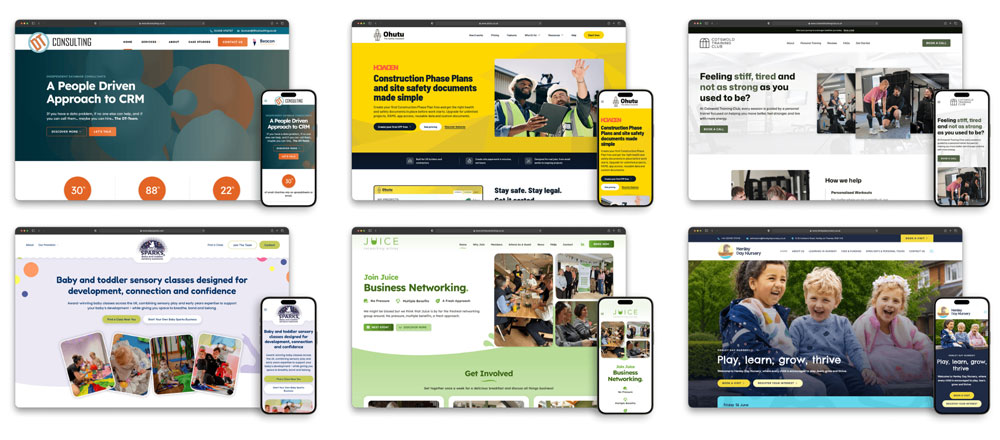
Knowing what to look for is one thing. The next step is checking whether those things are actually included in the price you are being quoted.
Beyond Your Brand's 100 Club packages bring the website build, hosting, security, maintenance, and ongoing support together in one monthly service. Here's what that includes:
Hosting, Security, Updates & Backups
Hosting, SSL, security, and daily backups are included in every 100 Club plan. Beyond Your Brand also handles ongoing hosting, updates, and maintenance, so these essentials are managed as part of the service.
A Proper Discovery and Design Process
Every 100 Club project starts with a discovery call to discuss your business needs before design begins. Beyond Your Brand then creates a bespoke mockup around your brand and audience, followed by a live demo site for you to review before launch. The website is professionally developed by the in-house team once the design is approved.
Free Monthly Edits
Each 100 Club package includes a set number of free website updates every month. Foundation includes up to two, Advanced up to four, and Professional up to six. Any requested updates are completed within three working days.
Additional Pages
If you need more pages beyond what is included in your package, additional pages are available from £50 + VAT each. The cost is clear upfront, so you can see what an additional page will cost rather than discovering an unexpected charge later.
Content Marketing Support
A website also needs useful, search-friendly content to support its performance. Beyond Your Brand's in-house content marketing team can create website copy, blog posts, product descriptions, and SEO-friendly headlines. This gives 100 Club clients access to content support alongside their website service.
Full Ownership
Your website and its content belong to you. After the initial 12-month period, you can take your website elsewhere or have another company redesign it at no extra charge, so you are not locked into using Beyond Your Brand.
If you would like Beyond Your Brand to handle the transfer, a one-off £250 fee applies for migration support.
Affordable & Reliable Website Design, At Your Fingertips
A low-cost website does not have to mean cutting corners. The important thing is knowing what is included, what you will pay over time, and what support you will have once your website is live.
Take a look at Beyond Your Brand's 100 Club packages to see what is included and how much you could pay for a professionally designed and managed website.
FAQs
-
What’s the real difference between cheap and affordable web design?
A low price does not necessarily mean a poor-quality website. The important thing is to check what is included, what you will pay over time, and what support is available after launch. After all, a website can be inexpensive to build while still providing the design, technical support, and ongoing maintenance a business needs.
-
Do I need to pay extra for SEO on a low-cost website?
It depends on the provider and package. Some website services include basic SEO foundations, such as mobile-friendly design, speed, and search-friendly setup.
More extensive SEO work, such as ongoing content creation, keyword targeting, and link building, may be a separate service depending on the provider.
-
Will a cheap website actually rank on Google?
Yes, a low-cost website can rank on Google. The price of the website itself does not determine its search performance. What matters is how well the site is built, structured, and maintained, alongside the quality and relevance of its content.
A cheap website that lacks basic SEO and technical foundations may make it harder for search engines and potential customers to find it.
-
Are offshore website builders a red flag?
Not automatically. Where a website is built is less important than understanding who is responsible for the work, what is included, and what support is available afterwards. Before choosing a provider, check who you will deal with, whether there is a clear support process, and who owns the website once it has been built.
-
How can I avoid getting a bad deal on website design?
Look beyond the initial quote. Check whether you own the website, what is included for hosting and security, how updates are handled, whether SEO foundations are included, and what support is available after launch.
You should also ask about additional charges for pages, content changes, and other work so you understand the likely total cost before committing.

