How To Handle 1-Star Google Review Scams

A sudden wave of 1-star Google reviews can feel like your reputation is being attacked. For businesses that depend on local search visibility, these spikes can be unsettling, confusing, and most importantly, potentially damaging to revenue and trust.
In many cases, however, these reviews aren’t coming from genuine customers. Recently, more businesses are being targeted by coordinated 1-star “review bombing” attacks, often followed by extortion attempts where scammers demand payment in exchange for removing them.
At Beyond Your Brand, we’re seeing this pattern more frequently across a range of industries: sudden clusters of negative reviews, profiles with no legitimate customer history, and, in some cases, direct messages attempting to pressure business owners into paying.
In this guide, we’ll break down what these scams are, why they’re happening, and the practical steps you should take if your business is targeted!
Contents
- What Are 1-Star Google Review Scams?
- Why Are These Scams Increasing?
- How To Identify a Fake Review Attack
- How To Respond To Scam Google Reviews
- Should You Reply To Fake Reviews?
- How Long Does Removal Take?
- How To Protect Your Business Long-Term
What Are 1-Star Google Review Scams?
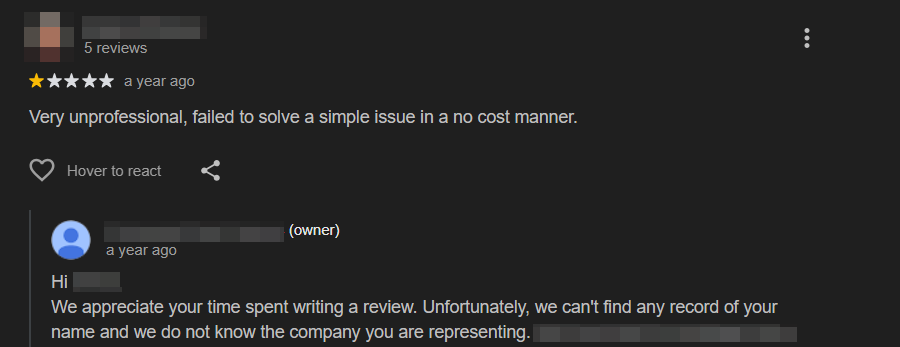
1-star Google review scams (often called review bombing or review extortion) are coordinated attacks where bad actors deliberately post large volumes of fake negative reviews on a business’s Google Business Profile (GBP) to damage their online reputation.
Unlike genuine customer feedback, these reviews are not based on real experiences. Instead, they are strategically posted to create immediate reputational harm and put pressure on business owners to respond quickly - often under financial duress.
In most cases, the scam follows a recognisable pattern:
- A sudden influx of 1-star reviews appearing within hours or a few days
- Reviewer profiles with little or no credible history of legitimate activity
- Vague or repetitive complaints (and in some cases, no written review at all)
- A noticeable disconnect between the reviews and any actual customer enquiries
Attempts To Hold Your Google Business Profile Hostage…
What makes these attacks particularly disruptive is the escalation that often follows. Once the negative reviews are live, the attacker may make direct contact with the business (via email, social media, or other channels), demanding payment in exchange for stopping the attack or removing the reviews.
This transforms the situation from a reputational issue into an outright extortion attempt.
In more aggressive cases, scammers will threaten continued waves of negative reviews if payment is not made, effectively holding a business’s Google presence hostage.
If you’ve been affected, the most important advice is to avoid engaging with them and under no circumstances send any payment.
Why These Scams Are Increasing
There are several reasons these scams are becoming more common:
- Low Barrier to Entry: Fake Google accounts can be created quickly and at scale, making it easy for attackers to launch large-volume review bombing campaigns.
- Global Targeting: Businesses can be targeted from anywhere in the world, meaning there is often no clear geographic link between the attacker and the business itself.
- High Dependence on Reviews: Local businesses in particular rely heavily on Google reviews to influence visibility, enquiries, and customer trust.
- Psychological Pressure: A sudden drop in star rating creates immediate concern, often causing business owners to act quickly without fully assessing the situation.
Because Google reviews directly impact trust and conversion performance, attackers understand that even a small number of negative reviews can create disproportionate pressure.
In many cases, this urgency is exactly what the scammers are relying on - forcing business owners into a reaction where they are more likely to consider paying to make the problem disappear.
How To Identify a Fake Review Attack

Not every negative review is fake, but coordinated attacks usually show clear red flags, such as:
1. Sudden Volume Spike
Multiple 1-star reviews appear within hours or days, often with little or no warning. This kind of clustering is unusual for genuine customer feedback and is often one of the first signs that something unusual is taking place.
2. No Customer Record
You cannot match the reviewer to any booking, enquiry, or transaction in your records. In many cases, there is no evidence that the person has ever interacted with your business at all.
3. Suspicious Profiles
Accounts may have:
- No profile photo
- No review history
- Generic or random names
They can also appear newly created or inactive, which makes them look less like real customers and more like throwaway accounts.
4. Similar Wording Patterns
Reviews often sound repetitive, AI-generated, or templated, even when they come from different accounts. You may notice the same phrases, tone, or structure being used across multiple reviews.
5. Extortion Message
The most obvious sign is a message demanding payment to stop or remove the reviews. This usually confirms that the attack is not genuine feedback, but a deliberate attempt to pressure your business into paying.
How To Respond To Scam Google Reviews
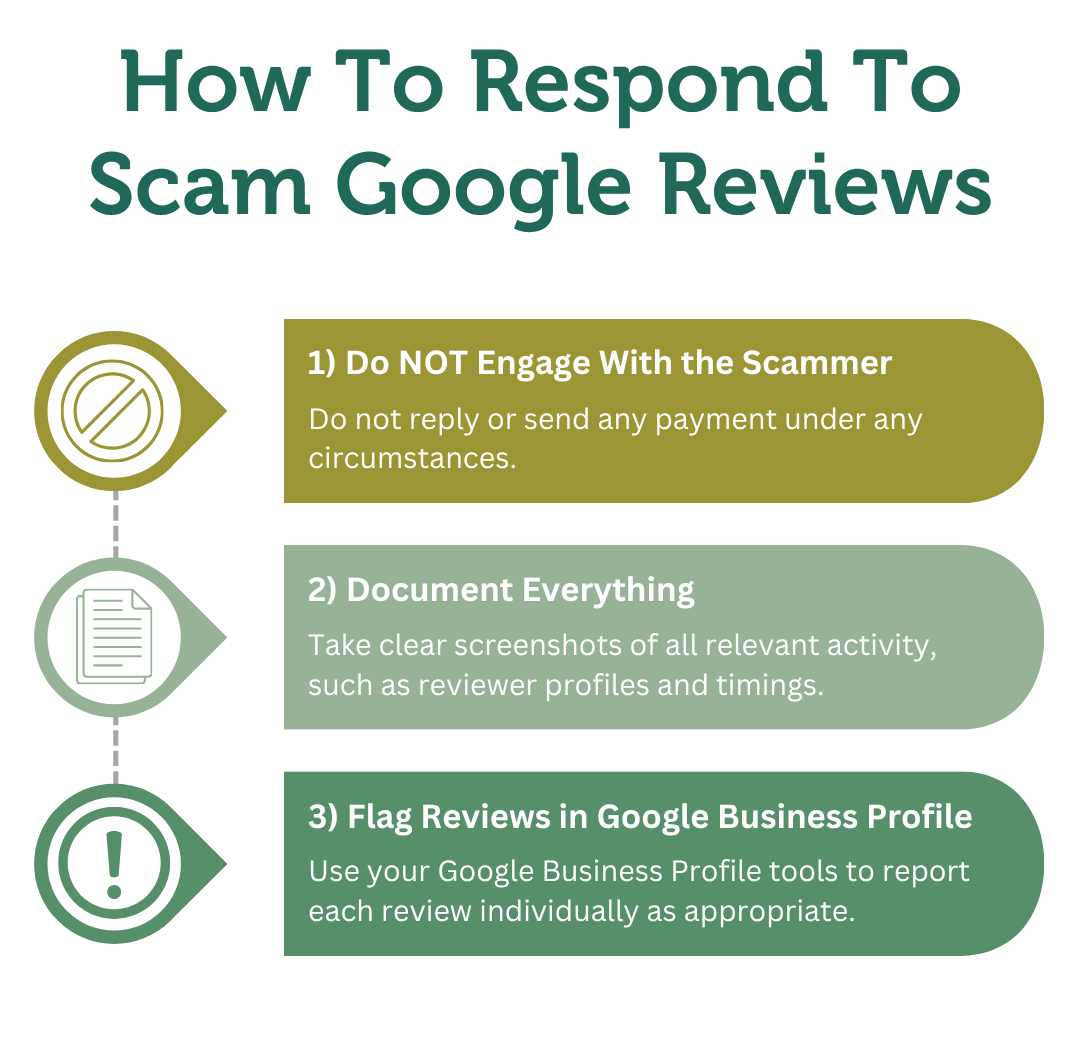
If your business is targeted, acting quickly but strategically can help limit the damage and strengthen your case when reporting to Google. Here’s what we recommend you do as soon as you spot a suspicious review:
1. Do NOT Engage With the Scammer
Do not reply or send any payment under any circumstances. Engaging often signals vulnerability and can encourage further contact. In most cases, the safest approach is to cut off all communication immediately and focus on the next steps instead.
2. Document Everything
Take clear screenshots of all relevant activity, including:
- All fake reviews
- Reviewer profiles
- Any messages received (across email, social media, SMS, etc.)
- The timing & frequency of the attack
Where possible, also note any patterns such as similarities in language. This evidence is important when escalating the issue to Google and can help demonstrate that the attack is coordinated rather than genuine feedback.
3. Flag the Reviews in Google Business Profile
Use your Google Business Profile tools to report each review individually as appropriate:
- Spam
- Conflict of interest
- Harassment (where applicable)
This should be done as soon as possible, as early reporting can improve the chances of removal. While not all reviews are removed immediately, consistent reporting helps build a stronger case for Google’s review teams to act.
Should You Reply To Fake Reviews?
In most cases, yes, but carefully.
A calm, professional response can help protect your public image while you wait for removal. However, it is crucial that you respond to the review itself, not any contact the scammer has made with you!
An example response could look like this:
“We take all feedback seriously, but we have no record of this customer or interaction. We believe this review may be in error and have reported it to Google for investigation.”
Avoid emotional or defensive replies, as these can reinforce the scammer’s intent to provoke a reaction.
How Long Does Removal Take?
Typically, most Google review removal requests are actioned within 3 to 5 business days, should Google agree the review is fake or spam. However, in more complex or high-volume cases, it can take longer for Google to take action.
It’s also worth noting that during periods of high reporting activity, responses from Google may be slower, even when the evidence is strong. This can be frustrating for businesses experiencing these scams, but it doesn’t necessarily mean action won’t be taken.
If reviews remain after your initial report:
- Re-submit evidence through the official escalation routes where appropriate
- Continue monitoring for any further fake or coordinated reviews
- Keep detailed internal documentation updated, including patterns of activity
How To Protect Your Business Long-Term
While no business can stop the scam reviews entirely, there are practical steps that can reduce both the likelihood and the impact of a 1-star review scam. Here’s what we suggest:
1. Build a Consistent Flow of Genuine Reviews
A steady stream of authentic customer reviews helps create a stronger Google Business Profile and makes sudden fake attacks easier to spot. It also softens the impact of any isolated negative reviews by keeping your overall rating supported by real feedback.
2. Monitor Your Google Business Profile
The sooner you spot unusual activity, the faster you can respond. Checking your profile daily (or setting up a clear internal process for monitoring it) can help you identify suspicious spikes before they cause lasting damage.
3. Train Staff To Recognise Scams
Make sure your team knows what review extortion looks like and understands that they should never engage, negotiate, or pay. A quick and consistent response can prevent panic and ensure the right steps are taken immediately.
4. Strengthen Your Wider Digital Presence
The less dependent your business is on a single platform, the less vulnerable it becomes to a sudden drop in Google ratings. Building a stronger presence across your website, social channels, email marketing, and other online touchpoints can help protect your visibility and credibility.
Protect Your Reputation & Strengthen Your Search Visibility
If your business has been affected by fake reviews or you’re concerned about future attacks, now is the time to take control of your online presence.
At Beyond Your Brand, our SEO services help you build stronger visibility in Google and improve trust signals across your listings. Book a FREE consultation to find out how we can help protect and grow your search performance long-term.
FAQs
How do I find my Google reviews?
If you manage a verified Google Business Profile, go to your profile in Google Search or Google Maps and select “Read Reviews”. On desktop, you can also search for your business in Google Maps and click the reviews section to view customer feedback.
Can I remove Google reviews?
You cannot remove a review yourself, but you can report reviews that violate Google’s policies and ask Google to review them for removal. Google provides a dedicated tool for reporting and checking the status of review removal requests.
How do I get Google reviews?
Google recommends encouraging customers to leave feedback by sharing a review request link or QR code from your Business Profile. Reviews can also help your business stand out because they appear alongside your profile in Google Search and Maps.
For more information, we’ve written a guide for getting more Google reviews.
How do I reply to Google reviews?
To reply, go to your GBP, select “Read Reviews”, and click “Reply” next to the review you want to respond to. Your business must be verified before you can reply, and Google reviews replies before publishing them.
Do Google reviews help SEO?
Yes, especially for local SEO. Reviews can help your business stand out and appear next to your Business Profile in Maps and Search, which can support visibility. For more local SEO support, please contact our experts today.

