Website Migration Recovery
Lost Traffic or Rankings After a Website Migration?
A website migration can have a significant impact on organic performance if important SEO signals are lost or technical issues are introduced during the move.
If your traffic, rankings, leads, or revenue have dropped since your website migrated, the cause is often identifiable - and in many cases, recoverable. We can investigate what changed, establish which issues are affecting performance, and create a prioritised recovery plan.
Get a Migration Recovery Audit
For this feature to work, you must have accepted cookies.
As an alternative, you can give us a call directly on 01993 835432
or Call 01993 835432 to discuss your issues

Still planning a migration?
Our website migration service helps you avoid these issues before they happen.
Signs Your Migration Has Hurt Your SEO
-
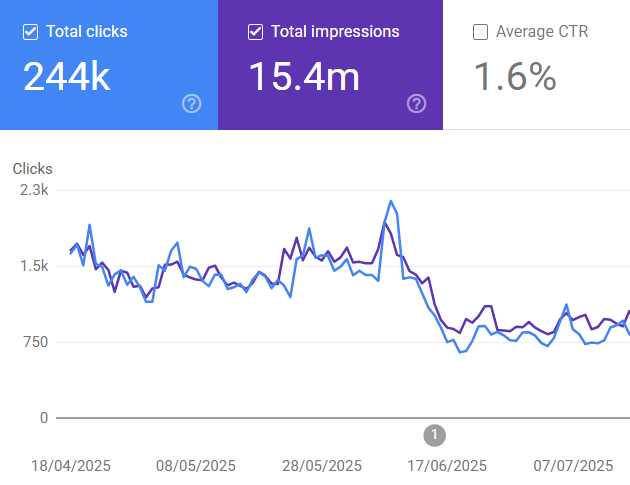
Organic traffic fell after the migration and hasn’t recovered in 3 months.
-
Rankings have dropped for keywords you previously performed well for.
-
Important pages have disappeared from Google's index.
-
The number of indexed pages has fallen unexpectedly.
-
Google Search Console is reporting crawl errors, redirect issues or soft 404s.
-
Leads or revenue have dropped without an obvious change in demand.
-
Traffic recovered partially after the migration, but has since plateaued below its previous level.
If any of these sound familiar, don't assume the loss is permanent. The first step is understanding what changed, when it changed, and whether the migration is responsible.
How We Diagnose What Went Wrong
Migration recovery starts with diagnosis, not rough guesses.
We compare your pre- and post-migration website to establish what changed and how those changes line up with the drop in performance. Crucially, this lets us separate genuine migration issues from other factors, algorithm updates, seasonal shifts, or wider changes in search demand, so effort goes where it will actually help.
Not every drop is a problem to fix. Sometimes performance falls because of a deliberate change: products or pages removed, sections consolidated, content cut back. The question isn't just what was lost, but whether that traffic was commercially valuable and whether the trade-off was understood before the change was made. Part of our diagnosis is telling you the difference, so you're focused on recovering what actually matters, not chasing traffic you were better off without.
Our diagnosis looks across:
-
Technical setup and site health
-
URL structure and redirects
-
Organic performance against benchmarks
-
Content and metadata
-
Internal linking and architecture
-
Crawlability and indexation
Common Migration Issues We Investigate
-

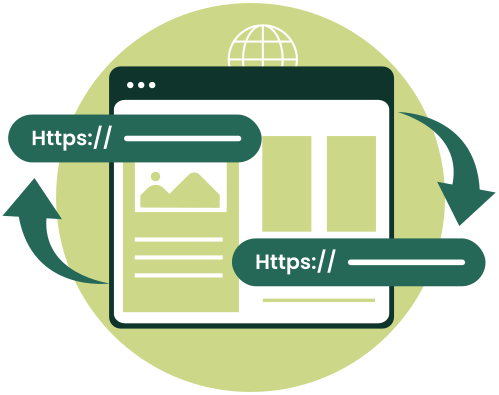
Missed, Incorrect, or Chained Redirects
When old web addresses aren't pointed correctly to their new equivalents, visitors and search engines hit dead ends or get bounced through unnecessary detours. A common one: old pages sent to the homepage instead of the page that replaced them, which loses their ranking value. -

Unexpected URL Changes
If the addresses of your pages changed during the migration, often without anyone intending it, the rankings, links, and Google listings tied to the old addresses can be lost. -

Missing Pages
Pages that existed on the old site sometimes don't make it across to the new one. If those pages were bringing in traffic, that visibility disappears with them. -

Incomplete Content Migration
Sometimes the pages move, but parts of them don't: page titles, descriptions, image text, or sections of the content itself. These are often what made the page rank, so losing them quietly weakens its performance. -

Indexation Blocks
Pages that should appear in Google simply don't. This usually happens when a setting that hides the site from search, used while the new site is being built, gets left switched on at launch. -

Canonical, Hreflang, or Pagination Changes
These behind-the-scenes settings tell Google which version of a page to show and, for international sites, which country or language each page is for. When they break during a migration, the wrong pages can rank, or the right ones can drop out of search. -

Rendering Issues
On some modern sites, content only appears after the page runs its code. If the new build changes how that works, search engines and AI bots may not reliably see your content, even though it looks fine to visitors. -
Performance Problems
A new theme, plugins, hosting, or infrastructure can leave the site slower or less stable. That affects both how easily search engines can crawl it and how visitors experience it. -

Internal Linking & Site Architecture Changes
The way pages link to each other helps search engines understand which are most important. When navigation or internal links change during a migration, that signal can weaken, and your key pages can lose ground.
Our Website Migration Recovery Process
-

1. Audit & Diagnose
Using pre- and post-migration data, website crawls, and technical analysis, we identify the changes that coincide with the performance decline. We'll investigate the migration itself while considering other factors that may have affected organic performance at the same time.
-
2. Prioritise
We prioritise problems according to their likely effect on your organic visibility and, importantly, their commercial value. This means focusing first on the pages, keywords, and technical issues that could make the biggest difference to your business.
-

3. Recover
Once the underlying issues have been identified, we help implement and validate the necessary fixes.
Depending on what we find, this could include correcting redirects, restoring missing pages or content, resolving indexation issues, fixing canonical or hreflang signals, improving internal linking, or addressing technical problems affecting crawling and rendering.
-

4. Monitor
We monitor rankings, organic traffic, crawlability, and indexation against an established baseline to understand how the site responds and catch any further issues. We'll also document what caused the loss and what resolved it, so you understand the migration's true impact and can avoid the same problems next time.
Recovery Takes Time
Website and SEO recovery isn't instant.
Even after migration issues have been fixed, search engines need to recrawl and reprocess affected pages before rankings and traffic can fully respond. How quickly performance returns will depend on the scale and nature of the issues, as well as how long they have been present.
This is why acting quickly matters. The sooner problems are identified and addressed, the more opportunity there is to recover lost performance.
The longer an issue persists, the more difficult recovery can become - particularly if legacy redirects, old URLs, or other migration infrastructure have already been removed.
We aim to restore as much of your previous organic performance as possible, understand what the migration cost you in the meantime, and leave your website in a stronger technical position than the version it replaced.

The Migration Recovery Audit
Our Migration Recovery Audit establishes exactly what changed during your migration, how it's affecting your performance, and what it will take to recover, so any work that follows is targeted, prioritised, and based on evidence rather than guesswork.
What the Audit Includes:
-
A pre- and post-migration comparison identifying what changed and when
-
A full technical investigation, covering 301 mapping, technical scoping, CMS considerations/limitations, and functionality changes
-
A user experience review - to understand why conversions are down
-
Analysis of organic performance against pre-migration benchmarks
-
A written report highlighting findings
-
A prioritised list of issues, ordered by likely commercial impact
-
A clear, actionable recovery plan
-
A meeting to walk through findings
What It Costs:
Migration Recovery Audits start from £800 + VAT.
The investment is based on a variety of factors such as:
-
Size of the website
-
Complexity of the migration/type of migration
-
Complexity of the reviews needed
-
Whether you have International markets
-
Multiple Domains/subdomains
-
eCommerce website vs lead gen
Final pricing depends on the size of your website and the complexity of the migration; a quick call will help us provide a more accurate figure.
Why the Audit Is Worth It:
Get a Migration Recovery Audit
Why Choose Beyond Your Brand?
-
Specialist SEO Expertise
A migration can affect the technical foundations your rankings depend on. Our SEO team can identify and investigate the issues that are most likely to be responsible for lost performance. -

Data-Driven Diagnosis
We don't rely on assumptions about what went wrong. By comparing pre- and post-migration performance, we build a clearer picture of what happened and where recovery opportunities exist. -

Commercially Focused Prioritisation
Not every technical issue deserves the same priority. We focus on the problems most likely to affect your visibility, traffic, leads, and revenue, helping you make the most of your recovery investment. -

Collaborative Delivery
We can work alongside your website developers and internal teams to understand what changed and make sure recommended fixes are implemented correctly. -

Support Beyond the Fix
Recovery doesn't stop when technical issues have been resolved. We can continue monitoring performance to understand how the website responds and identify further opportunities to strengthen organic visibility.
-
Specialist SEO Expertise
A migration touches the technical foundations your rankings depend on. Our experienced SEO team manages those changes deliberately, protecting your traffic and revenue throughout the transition. -

SEO at the Centre
We don't treat SEO as an afterthought. From planning and development through to launch and monitoring, we make sure SEO is built into the migration so you can protect existing performance and create opportunities for future growth. -
Collaborative Delivery
We work closely with your developers, designers, project managers, and marketing teams throughout the migration. Clear communication and shared planning help ensure SEO requirements are understood, implemented, and checked at every stage. -
Tailored Strategies
No two migrations are the same. We build a strategy around your website, technology, objectives, and specific migration requirements, whether you're changing CMS, redesigning, changing domains, or consolidating sites. -
Data-Driven Decisions
We establish clear performance benchmarks before migration and use data throughout the project to measure impact and guide decisions. That means your migration is managed using evidence, not assumptions. -
Support Beyond Launch
Going live isn't the end of the migration. We continue monitoring rankings, traffic, crawlability, and indexation after launch, helping resolve issues quickly and identify opportunities to strengthen your organic performance over the long term.
Meet the SEO Team
Lost Performance After Migration? Let's Find Out Why.
If your website lost traffic, rankings, leads, or revenue after a migration, the first step is finding out the cause.
By partnering with our specialists, we'll help you identify the issues affecting your organic performance and establish a clear path towards recovery.
Get a Migration Recovery Audit
FAQs
-
How do I know if my traffic drop was caused by a website migration?
A significant drop shortly after a migration can be a strong indication that something changed during the move. However, other factors such as algorithm updates and changes in search demand can occur at the same time.
Comparing pre- and post-migration performance and technical changes can help establish the likely cause.
-
Can you recover rankings lost after a website migration?
In many cases, lost performance can be recovered, particularly when the decline has been caused by identifiable technical or SEO issues introduced during the migration.
The extent and speed of recovery will depend on what changed, how long the issues have been present, and whether important migration infrastructure is still available.
-
How long does SEO migration recovery take?
There is no fixed timeframe. Simple technical issues may be resolved relatively quickly, while larger migrations involving extensive URL changes, missing content, or indexation problems can require a longer period of implementation and monitoring.
-
What happens during a Migration Recovery Audit?
We'll investigate the changes between your previous and current website, analyse organic performance, and look for technical issues affecting crawling, indexation, redirects, content, internal linking, and other SEO signals. We'll then identify and prioritise the issues that are most likely to be affecting your performance.
-
Is it too late to recover from a website migration?
Not necessarily. Even if your website migrated some time ago, there may still be identifiable issues affecting its organic performance.
However, the sooner problems are investigated, the more opportunity there may be to recover lost visibility - particularly before old URLs, redirects, or other migration infrastructure are removed.
-
What do you need from us to get started?
In most cases, just access to the right data, typically Google Analytics and Search Console, your current website, and where possible the previous version or its records. It also helps to know roughly when the migration happened and when performance dropped. If you don't have all of this, we can usually work with what's available.
-
We made deliberate changes to the site. Is a traffic drop still a problem?
It depends on what was lost. If the pages or products you removed were driving traffic that had real commercial value, the drop matters and may be worth addressing. If that traffic rarely converted, losing it may be perfectly fine, or even beneficial. The issue is usually not the change itself, but that its impact wasn't understood or quantified beforehand. We can assess what the change actually cost you and whether any of it is worth recovering.